Stop Prompting. Start Learning.

Stop Prompting. Start Learning.
A straight-up guide for my son — and every teen ready to actually learn something new.
Hey kid. And yeah — if you're not my son but you found this post, you're included too. Sit down.
There's a thing happening right now on every dev forum, every LinkedIn feed, every Discord server where people are supposed to be learning. It's a loop. Someone wants to build something. They open ChatGPT or Cursor or whatever model just dropped. They type their idea. They get back code that kind of works. Something breaks. They paste the error back in. They wait. It half-fixes. They switch models. They wait again. Eventually, after two hours of copy-paste purgatory, they have something that runs. And they have learned exactly nothing.
That's not building. That's being a middleman between a chatbot and a compiler.
"But it works, right?" Sure. And someone who's never driven can also be a passenger. That doesn't make them a driver.
I'm not here to tell you AI is bad. It's not. I use it daily. But there's a difference between using a tool and being used by one. Right now, a generation is outsourcing their thinking to a black box and calling it productivity. No cap — you're not learning faster. You're not learning at all. You're vibing your way to mediocrity.
Here's what I did instead. I had two weeks to learn Flutter — a mobile UI framework I had zero experience with — and ship a real product. No bootcamp. No course I'd pay $299 for and never finish. Just me, a structure I built from scratch, and the discipline to follow it.
The goal wasn't to understand everything. The goal was to understand enough — in the right order.
The principles. Simple. Non-negotiable.
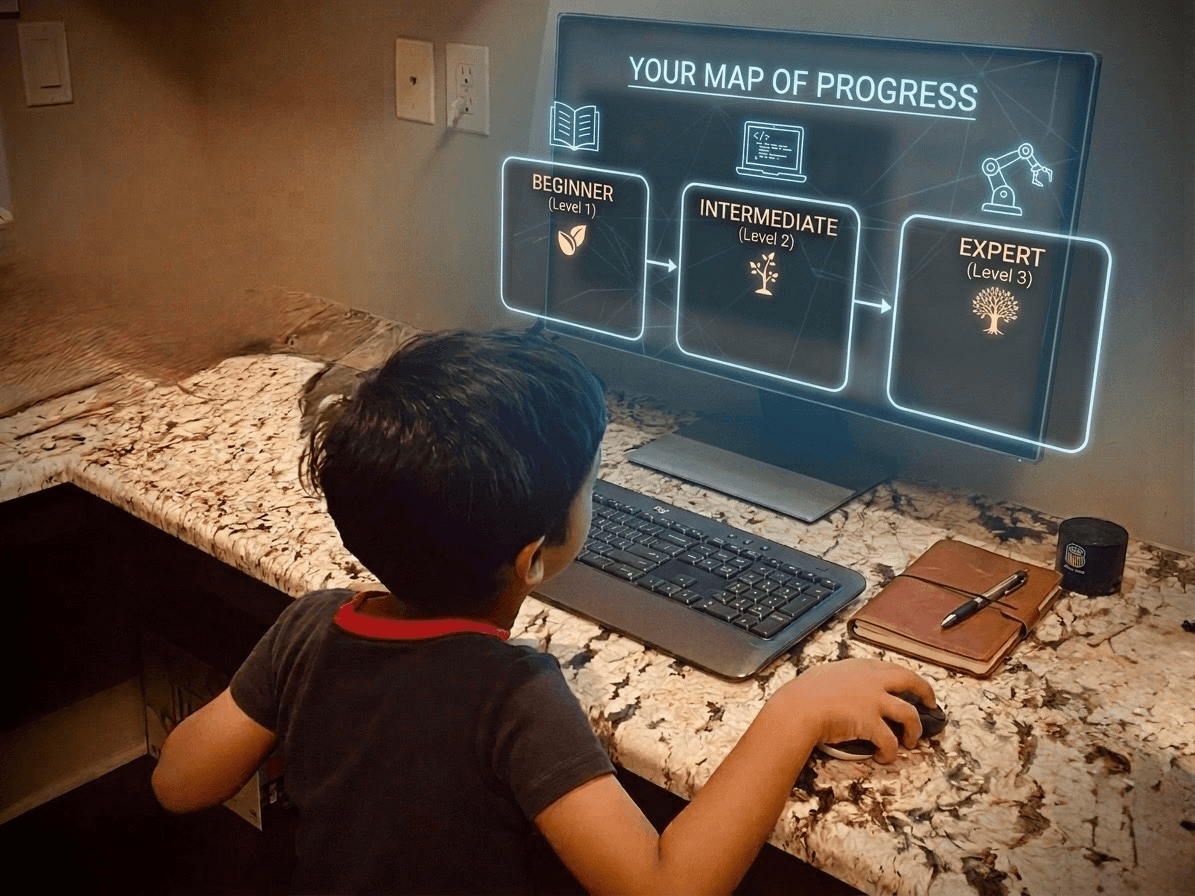
01 — Start with a map, not a vibe
Before you touch a keyboard, know the terrain. What does beginner look like? What does intermediate look like? What's expert? You don't have to reach expert in a sprint — but you need to know it exists. Sprinting blind is just running in circles.
02 — Touch the real thing on day one
Not a YouTube intro. Not a 40-page docs overview. A working tutorial, hands on keyboard, within the first hour. Theory without reps is just vibes with footnotes. Build something ugly. Build it fast. The understanding comes from doing.
03 — Learn atoms before molecules
Every language has primitives — the smallest building blocks. In Flutter, those are widgets. In Python, they're data types and control flow. You cannot build sentences without knowing words. Don't skip the boring vocabulary phase. It pays off in week two.
04 — The friction is the lesson
When something breaks — and it will break — resist the reflex to paste it into an AI. Sit with it for five minutes. Read the error. Actually read it. The things you debug yourself are the things you remember forever. The things the AI fixes for you? Gone by morning.
05 — Stand on shoulders, don't reinvent
Smart learners know what not to build. Libraries exist. Packages exist. Patterns exist. Using them isn't cheating — knowing which ones to pick and why is itself a skill. But you have to understand the layer below to make smart choices about the layer above.
06 — Zoom out regularly
Every few days, stop building and ask: do I understand why this works, not just how? Architecture, constraints, the big picture. If you can only follow a recipe but can't explain the ingredients, you don't actually know how to cook.
Real world proof — How those 6 principles mapped to learning Flutter in 2 weeks
This isn't theory. This is literally the path I walked. Principle by principle, week by week.
Noob 75-min codelab on day one (principle 2). Dart language tour + cheatsheet — atoms before molecules (principle 3). Learn 8 core widgets: Container, Text, Scaffold, AppBar, Row, Column, Button, Image.
Intermediate One widget at a time, deep. Concurrency, async/await, logging. Start reusing packages — shared_preferences, audio, permissions (principle 5). Hit IDE errors, read them, fix them yourself first (principle 4).
Expert Adaptive UI, design systems, architectural overview. Understand constraints — why layouts behave the way they do (principle 6). BLoC state management — because logic should never live in your UI layer.
At the end of two weeks I shipped. Not perfect. Not beautiful. But mine — built on a foundation I actually understood. No prompt-and-pray. Just a map, a method, and the reps.
So here's the real talk: AI is going to get better. The code it spits out is going to get cleaner. The gap between "it kind of works" and "it's production ready" is going to shrink. But the gap between someone who actually understands what they're building and someone who's just prompting? That gap is going to get bigger. Way bigger.
The kids who put in the reps now — who learn the atoms, who sit with the friction, who zoom out — those are the ones who'll use AI as a multiplier. Everyone else is just going to be a better-dressed middleman.
Don't be the middleman, kid.
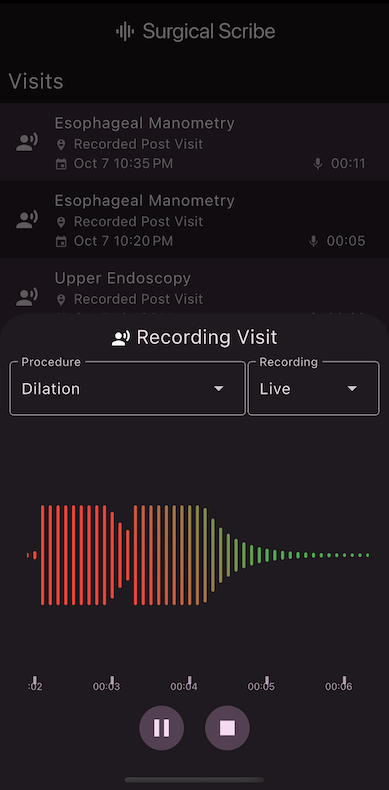
The Result
The product was the proof (app for medical practitioners). The learning was the prize. What I built was something I take pride in.